
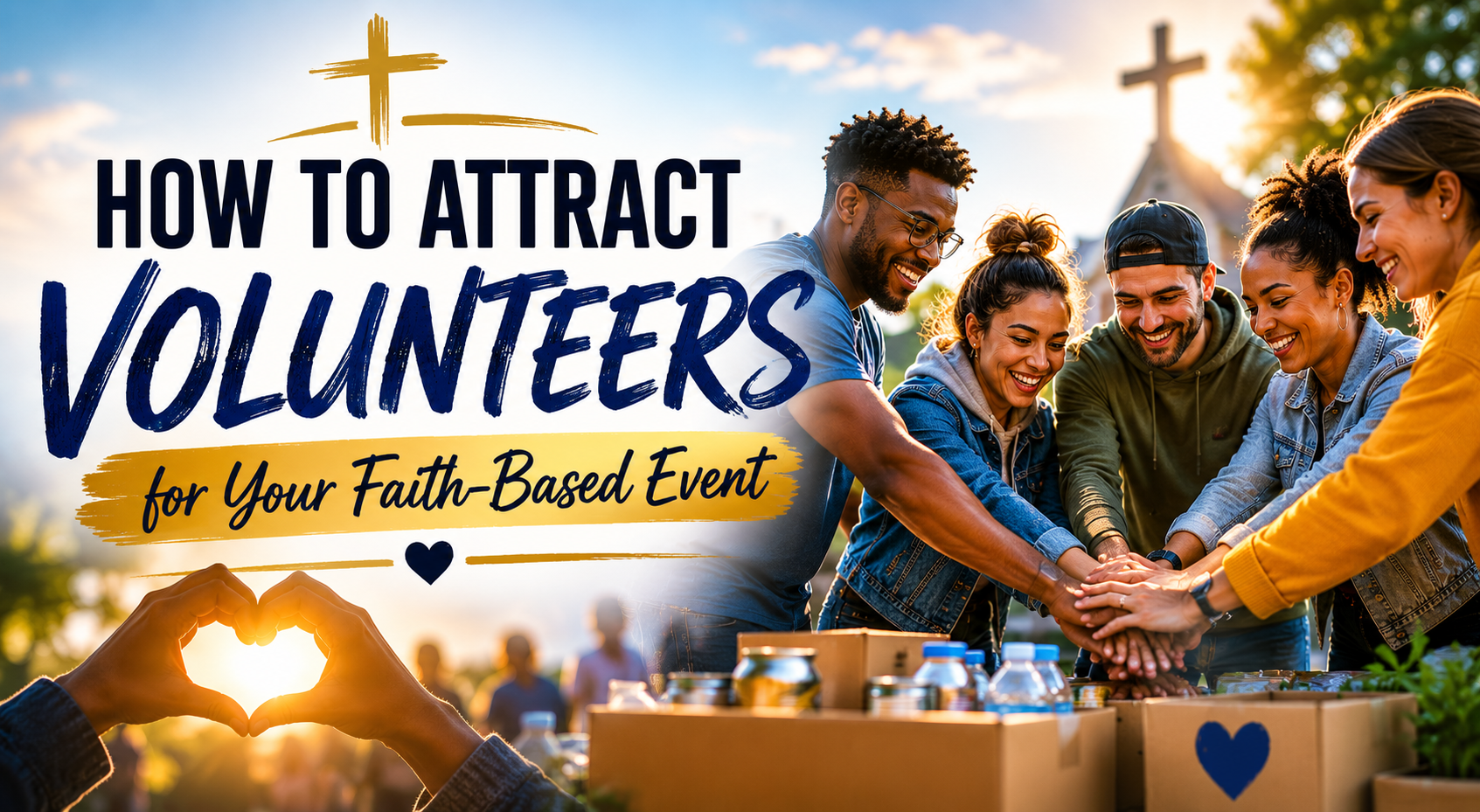
Every successful faith-based event begins with a vision, but it takes volunteers to bring that vision to life.
Whether you’re planning a community outreach, worship night, Bible conference, youth rally, neighborhood festival, prayer gathering, or church fundraiser, volunteers are often the heartbeat of the event. They welcome guests, set up equipment, serve meals, manage registration, assist speakers, support worship teams, and help create an atmosphere where lives can be transformed.
The challenge many organizers face isn’t planning the event. It’s finding enough people willing to help.
The good news? People want to serve. They simply need to understand the purpose, feel valued, and see how their contribution makes a difference.
People rarely volunteer because of a task list. They volunteer because they believe in a mission.
Before asking someone to help, clearly communicate why the event matters.
Instead of saying:
“We need volunteers to set up chairs.”
Try saying:
“We’re creating a welcoming environment where families can encounter hope, build relationships, and strengthen their faith.”
Purpose inspires participation.
When people understand the impact of their service, they become invested in the outcome.
Not everyone is comfortable standing on a stage or speaking in front of a crowd.
Successful volunteer recruitment offers multiple ways to serve:
When people can serve according to their gifts and interests, they are more likely to stay engaged.
One of the biggest mistakes event organizers make is trying to do everything themselves.
Faith-based events thrive when churches, ministries, nonprofits, and community leaders work together.
Collaboration creates:
Rather than competing for volunteers, organizations can unite around a shared mission of serving their community.
When churches collaborate, communities benefit.
Volunteers want to know they are part of something meaningful.
Show them how their role connects to the larger mission.
The person greeting guests at the door may be welcoming someone who desperately needs encouragement.
The volunteer setting up tables may be helping create a space where someone discovers faith for the first time.
The photographer documenting the event may capture moments that inspire others to get involved in future outreach efforts.
Every role matters.
Recognition goes a long way.
Simple gestures can make a significant impact:
People who feel valued are far more likely to volunteer again.
The most effective volunteer recruitment strategy is often the simplest: personal invitation.
While social media and email campaigns are helpful, people are more likely to say yes when someone personally asks them to serve.
Encourage leaders and existing volunteers to invite friends, family members, coworkers, and church members to participate.
A personal invitation communicates trust and importance.
Today’s volunteers expect convenience.
Create easy-to-use online forms, volunteer registration pages, and event communication systems.
Provide clear information about:
The easier it is to sign up, the more likely people are to participate.
The strongest volunteer groups become communities.
Encourage volunteers to pray together, share meals, celebrate wins, and build relationships beyond the event itself.
People stay connected when they feel like they belong.
Volunteers who build friendships often become long-term ministry partners.
In today’s world, communities are searching for connection, purpose, and hope.
Faith-based events provide opportunities for all three.
But no single church, ministry, or organization can meet every need alone.
Collaboration allows the faith community to maximize resources, expand its reach, and increase its impact.
When churches partner instead of compete, when ministries unite around shared goals, and when volunteers rally behind a common mission, extraordinary things happen.
Communities become stronger.
Lives are changed.
And faith becomes visible through action.
Volunteers are more than helpers. They are ministry partners, community builders, and ambassadors of hope.
The key to attracting volunteers is not simply asking for help. It is inviting people into a meaningful mission that matters.
When purpose, collaboration, and appreciation come together, volunteers don’t just show up.
They become the driving force behind events that leave a lasting impact on communities for years to come.
And that’s when a simple event becomes something much bigger: a movement.